
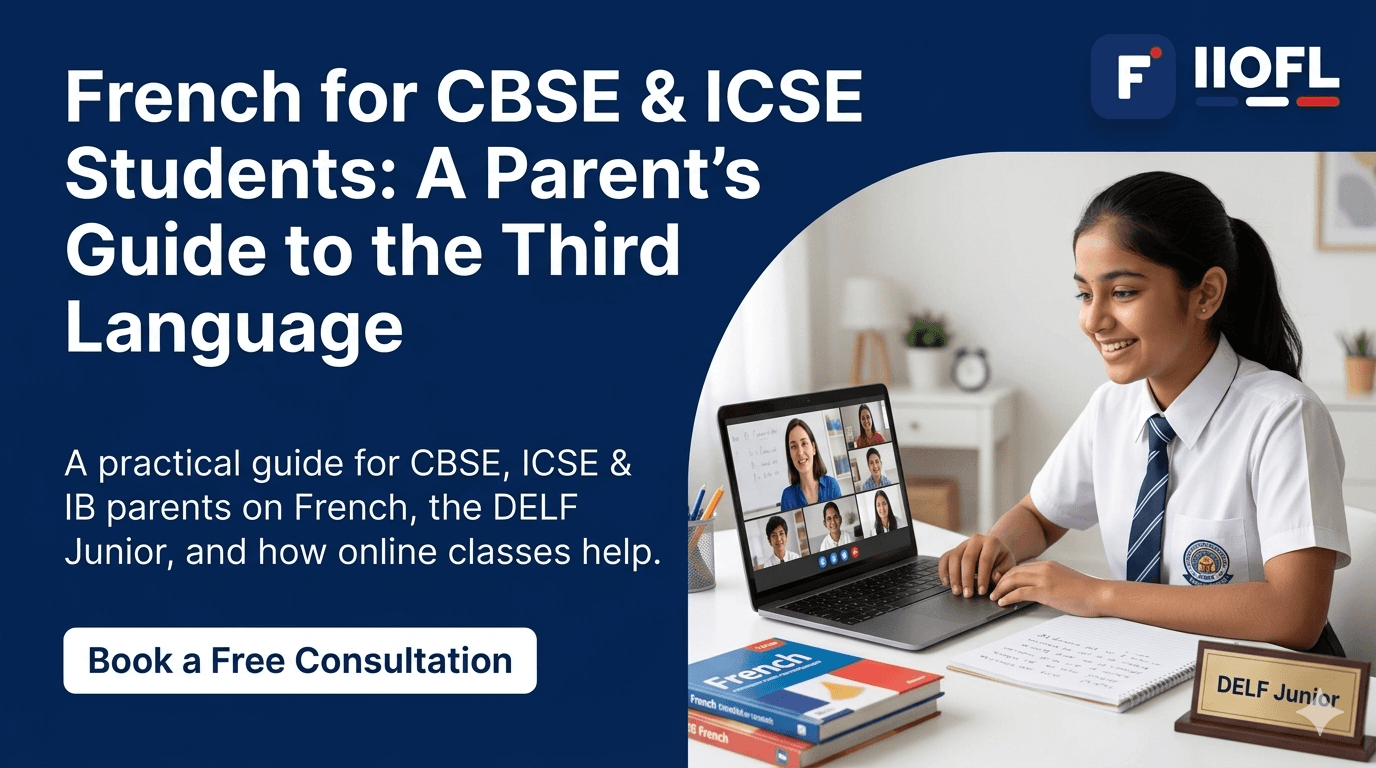

French for CBSE & ICSE Students: A Parent's Guide to the Third Language
For many Indian families, the "third language" decision in middle school feels minor at the time, and turns out to matter for years. French is one of the most popular choices in CBSE, ICSE, IB, and IGCSE schools, and for good reason. But choosing French and doing well in French are two different things.
This guide is written for parents: why French is a strong choice, how it connects to the internationally recognised DELF Junior diploma, and how to support a child who is struggling, or who wants to get ahead.
Why so many Indian schools offer French
French is widely taught across Indian curricula as a third language from around Class 6 onward. Families choose it because it is:
- Globally useful. French is spoken across five continents and is an official language of many international organisations.
- A scoring subject. A well-taught language can lift a student's overall academic profile.
- A long-term asset. Early French gives a head start toward future study-abroad, immigration (especially Canada), and career options.
- A gateway to a recognised diploma. Unlike a school grade, the DELF is an international certificate a student keeps for life.
What is the DELF Junior, and why does it matter?
Here's something many parents don't realise: your child's French learning can lead to a globally recognised diploma, not just a report-card grade.
The DELF Junior (also called DELF Scolaire) is the school-version of the official French diploma issued by the French Ministry of National Education. It covers A1 and A2 levels and tests the same four skills as the standard DELF, but uses topics and contexts suited to teenagers.
The advantage is real: a DELF certificate is permanent, international, and recognised by universities and employers, a far stronger signal than "scored well in French in Class 9." For a student building a profile for higher studies abroad, it's a genuine differentiator.
"My child is struggling with French at school": what to do
This is the most common message we receive from parents, and the cause is almost always the same: large classrooms and not enough speaking practice. In a school class of thirty-plus students, a child can go weeks without speaking a full French sentence aloud. Grammar gets memorised; confidence never develops.
What actually helps:
- Small-group, live classes where the child speaks in every session.
- Patient correction rather than embarrassment in front of a large class.
- A clear structure that fills the specific gaps holding the child back.
- A teacher who understands Indian students and the exact points where they tend to get stuck.
Often, a few weeks of focused support transforms a child's confidence, and their school marks follow.
"My child is doing well and wants to get ahead"
For strong students, French can become a standout strength rather than just another subject. The path is straightforward: build solid ability level by level, then target the DELF Junior to earn an international diploma while still in school. By the time university applications come around, your child has something most applicants don't.
How online French classes work for school students
Parents are sometimes unsure whether online lessons suit a younger learner. Done right, they work very well:
- Live, not recorded: the child interacts with a real teacher in real time.
- Small batches: genuine attention and speaking time.
- Flexible timing: classes fit around school and school holidays.
- Progress you can see: materials and assignments are organised in Google Classroom, so you can follow along.
At IIOFL, classes are taught live in small groups by a CAVILAM-certified teacher of Indian origin, someone who understands both the French language and the Indian school context.
Frequently asked questions
Is French a good third language for CBSE/ICSE? Yes: it's globally useful, generally scores well, and can lead to the internationally recognised DELF Junior diploma.
What is the difference between DELF and DELF Junior? They certify the same levels and skills. DELF Junior simply uses themes and contexts designed for school-age students.
My child gets good school marks in French but can't speak it. Is that normal? Unfortunately, yes: it usually reflects large classes with little speaking practice. Small-group live classes fix this quickly.
At what age can my child start? French can be started in the school years, and the DELF Junior is designed precisely for this age group. A short placement test helps us find the right starting point.
Give your child a head start
Whether your child needs to catch up or wants to race ahead, the right support changes everything. Book a free consultation and a free placement test, and we'll recommend exactly where your child should begin.
Take the next step: Book a free consultation or learn about our course packs for school students.